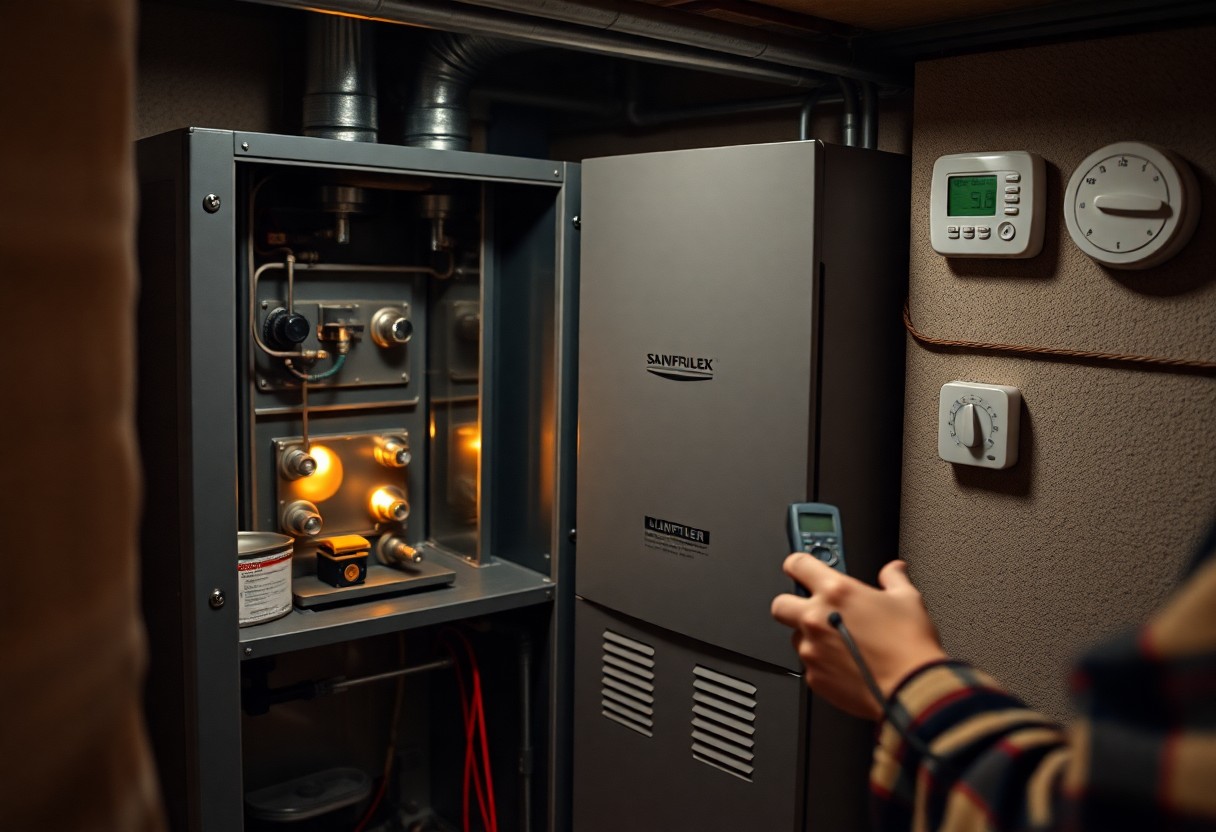
Check thermostat, breakers, pilot/igniter, gas smell, shut off supply, clear filters and vents before calling furnace service in Murrysville, PA.
It’s annoying when the furnace runs but gives no heat; before you call service in Murrysville, PA, check the thermostat and breakers, inspect the pilot/igniter for a simple fix, smell for gas and shut off supply if detected, and clear filters and vents.
Key Takeaways:
- Thermostat and power: confirm thermostat is set to heat, batteries and wiring are OK, and the furnace breaker and service switch are on.
- Ignition and gas supply: check for a pilot flame or functioning electronic igniter, ensure the gas valve is open, and evacuate and call the gas company if you smell gas.
- Airflow and safety controls: replace a dirty air filter, clear blocked vents, and inspect furnace error lights or a tripped high‑limit or flame sensor that can run the blower without firing the burners.
Thermostat Calibration and Power Sources
Check that your thermostat is set to Heat and displays the correct room temperature; calibration errors or loose wiring can run the blower without ignition. If you use a smart thermostat, verify it has steady power and a proper C‑wire connection, since low power or bad wiring often causes cycling without heat.
Verifying Mode Settings and Temperature Differential
Confirm you selected Heat, not Fan or Off, and set the thermostat several degrees above room temperature to force a call for heat; a tiny or reversed temperature differential can prevent ignition even when the furnace runs.
| Quick Thermostat & Power Checks | |
|---|---|
| Thermostat Mode | Set to Heat; raise setpoint 3-5°F |
| Display & Batteries | Replace weak batteries; verify C‑wire |
| Breaker & Power | Look for tripped breaker; turn off power before panel work |
| Wiring | Inspect for loose or burnt wires; call pro if found |
Inspecting Batteries and Electrical Breaker Panels
Inspect thermostat batteries for corrosion and replace them with the correct type; weak cells can allow the display but block heat commands. Check the breaker for tripped switches and reset only if you can safely access the panel; if you spot sparks or burn marks, stop and call a licensed technician.
You must turn off power at the furnace breaker before removing the thermostat cover or opening the panel; use a non-contact voltage tester if available. Replace batteries with the correct size and orientation, clean corrosion with a soft brush, and never reset breakers repeatedly-persistent tripping or burning smells indicates a wiring fault. If the breaker is warm, labeled incorrectly, or you find loose wires, contact a licensed electrician or HVAC technician rather than continuing to DIY.
Airflow Obstructions and Filtration Issues
Clogged filters or obstructed ducts often stop warm air from reaching rooms even while the furnace runs; you should check accessible ducts, filter slots and any collapsed flex runs. Blockages cause reduced airflow and can trigger safety cutouts if ignored.
Assessing Air Filter Condition for Restricted Flow
Inspect the air filter for dirt, rips or improper sizing; a heavily soiled filter can cut airflow and strain the blower. You should replace disposable filters or clean reusable ones, and watch for improved performance within a single cycle.
Checking Supply Registers and Return Grilles
Confirm supply registers and return grilles are open, unblocked by furniture, and free of heavy dust; closed or blocked outlets make rooms cold and force your system to overwork. You can slightly adjust dampers for better balance.
When checking, you can remove a register and run the furnace briefly to feel airflow; weak flow at multiple registers points to a return-side or blower problem rather than a single vent. If you detect no airflow at many outlets, schedule professional diagnostics.
Fuel Supply and Ignition System Status
Check the fuel supply and ignition system for obvious issues before scheduling service; you should verify the gas valve position, look for a gas odor, and confirm power to ignition controls. If you detect a strong gas smell, evacuate immediately and call professionals.
Confirming Gas Valve Position and Fuel Delivery
Verify the main and appliance gas valves are in the open position and that fuel lines show no damage; you can listen for burner ignition when cycling the thermostat. If you find a closed valve or signs of a leak, shut off gas and contact a licensed technician.
Evaluating the Igniter or Pilot Light Functionality
Test the igniter or pilot for a steady blue flame or audible ignition clicks; you should not see a yellow, sputtering flame. If you detect no spark or an unstable pilot, avoid probing the burner and call a professional-especially if you smell gas.
Consider that intermittent ignition often stems from a dirty pilot tube, a failing thermocouple, or a weak igniter transformer; you can visually inspect the pilot assembly for soot or debris, but do not attempt replacements if you’re untrained. If the thermocouple is cool or the igniter never sparks, note those observations for the technician and avoid operating the furnace if you smell gas.
Safety Switches and Sensor Performance
Inspect safety switches and sensors for loose wiring or blocked vents; they can shut the system off even when the furnace cycles. If you see wear or a burnt smell, cut power and call a pro because you could face shock or fire risk.
Testing the Flame Sensor for Carbon Buildup
Test the flame sensor by gently cleaning carbon with fine steel wool after you turn power off; heavy deposits mean you should replace the sensor because a dirty unit can cause failed ignition cycles and repeated cutouts.
Understanding Pressure Switch Faults and Venting
Check the pressure switch tubing and vent for blockages or moisture; a stuck switch can let the furnace run without proper exhaust, creating a carbon monoxide risk and triggering safety shutdowns.
Examine the pressure switch by watching the inducer start and the switch close; you should see an intact vacuum hose and clear venting. If the switch won’t close or the inducer runs unusually long, suspect a clogged flue, collapsed tubing, or a bad switch. Never bypass the switch-it prevents exhaust backflow and CO buildup. If faults repeat, shut down the system and call a licensed technician.
Blower Motor and Fan Belt Integrity
Check the blower motor and fan belt for wear, loose mounts, or visible damage; a worn belt or seized motor can make your furnace run without delivering heat.
Distinguishing Between Fan Operation and Heat Cycles
Observe whether the fan runs continuously while the burner cycles; if the fan runs but the burner doesn’t ignite, thermostat or control board issues may be causing your no-heat condition.
Identifying Unusual Noises or Mechanical Failures
Note any squealing, grinding, or burning smells when your furnace runs; metal scraping or burning odors indicate you should shut it off and call for service.
Inspect the blower housing, bearings, and belt tension; loose bearings cause wobble and accelerated wear or motor failure, while a frayed belt can snap. You can often restore operation by tightening a loose belt or replacing worn bearings, but if you hear rhythmic thumps or asymmetric vibration, shut the system off and schedule service to prevent fire or motor burnout.
Murrysville Environmental Factors
Local winters and pollen can block intakes and confuse your furnace; inspect outdoor components.
- Murrysville, PA
- no heat
- furnace
Assume that heavy snow or frozen PVC vents are restricting combustion air and causing the issue.
Clearing Snow or Debris from External PVC Vents
Clear snow and leaves from the PVC vent openings so your furnace can exhaust; you risk carbon monoxide buildup if vents stay blocked.
Recognizing Symptoms of a Cracked Heat Exchanger
Spot steady soot, unusual smells, yellow burner flames, or frequent pilot failures; these signs suggest a cracked heat exchanger and a carbon monoxide hazard, so shut the system off and ventilate while you arrange service.
Inspect for persistent rust, hairline cracks, loud ticking, uneven heat, or water near the flue; if you detect these, do not run the system and get outdoors because exposure can cause carbon monoxide poisoning. Contact a qualified technician immediately for combustion testing, pressure checks, and heat exchanger repair or replacement.
Conclusion
When your furnace turns on but you are getting no heat in Murrysville, PA, the goal is to separate a simple setup or airflow problem from an ignition or safety shutdown. Start with the basics that cause a lot of no-heat calls: confirm the thermostat is set to heat, raise the setpoint a few degrees, make sure the breaker and furnace service switch are on, and replace a dirty filter that can trip safety limits. Next, check what the furnace is actually doing. If the blower runs but you never hear ignition or feel warm air, the issue is often the igniter or pilot, a closed gas valve, a dirty flame sensor, or a venting and pressure-switch problem that prevents the burners from firing. In winter, blocked PVC vents from snow or debris can also stop ignition for safety reasons. If you smell gas, see soot, notice yellow flames, or suspect a heat exchanger problem, shut the system off and get professional help immediately. If the quick checks do not restore heat, Hoffner Heating and Air Conditioning is an HVAC contractor in the Murrysville, PA area that can diagnose the ignition and safety controls quickly and get your heat back safely.